
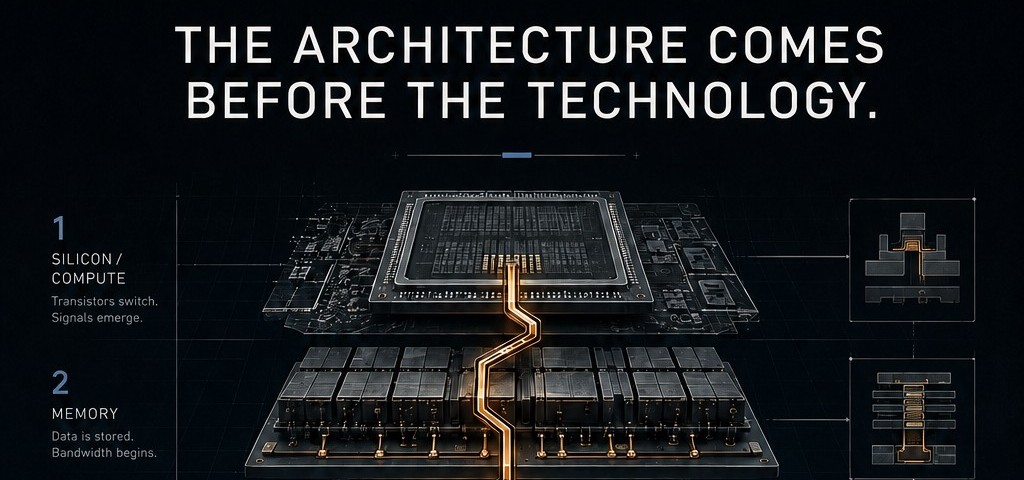
The Memory Problem Is Expanding
For years, the memory conversation has largely been framed around familiar measures: capacity, bandwidth, latency, power and cost.
AI is forcing us to widen that frame.
As accelerators become more capable and memory bandwidth rises, the challenge increasingly extends beyond the memory device itself. Packaging, interconnect density, power delivery, thermal behavior and the physical path between memory and compute begin participating in the same system-level problem.
That makes recent discussion around emerging memory architectures particularly interesting.
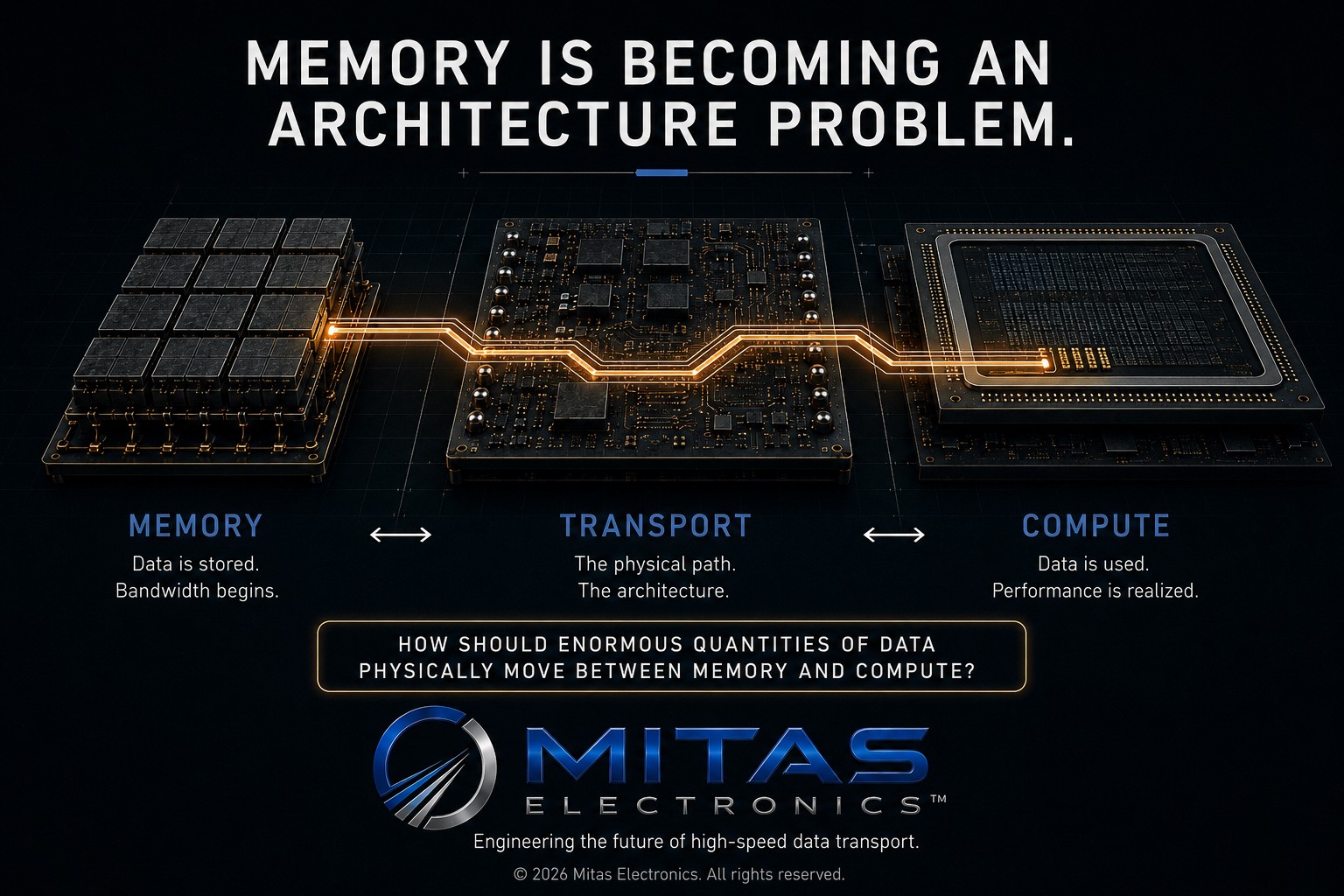
HBM, XBM and other approaches should not be viewed only as competing memory technologies. They also represent different answers to a deeper architectural question:
How should enormous quantities of data physically move between memory and compute?
Bandwidth Has to Cross a Physical Interface
A memory device may be capable of delivering extraordinary bandwidth.
But useful bandwidth ultimately has to cross a real physical interface.
That interface has geometry.
It has loss.
It has reflections.
It has coupling.
It consumes power.
It occupies area.
It imposes packaging constraints.
And as signaling rates rise, the electromagnetic behavior of that physical path becomes increasingly difficult to separate from the architecture built around it.
This suggests that the memory wall itself may be evolving.
How do we build faster memory?
We may also need to ask:
How should memory and compute be physically connected as bandwidth continues to scale?
What Assumptions Does the Physical Path Create?
HBM provides one powerful answer: enormous bandwidth through very wide interfaces and advanced packaging.
Emerging architectures are exploring other possibilities, including increasingly serialized connectivity.
The important question isn’t which approach wins.
The more useful question is what each architecture teaches us about the constraints governing data movement.
What happens to packaging when interface width changes?
What happens to power?
What happens to reach?
What happens to signal integrity?
What happens to system topology?
And perhaps most importantly:
What assumptions about memory architecture exist primarily because of limitations in the physical transport path?
That is the question we find particularly interesting.
Because when a fundamental constraint changes, the architecture around that constraint can change with it.
Architecture Before Technology
The next memory race may not be defined by capacity or bandwidth alone.
It may be defined by how deeply we understand the physics between memory and compute—and what architectures become possible when those constraints change.
At Mitas, we believe the architecture comes before the technology.
And that begins with a deceptively simple question:
How does the data need to move?
Mitas Electronics
Engineering the future of high-speed data transport.
Understand Deeply. Engineer Thoughtfully. Advance Continuously.