

Most data center interconnects look solid in lab tests. Yet once deployed, shifting thermal conditions inside a live data center can quietly erode their performance. Your cooling system isn’t just background infrastructure — it defines the thermal reality your high-speed interconnect must handle to keep signal integrity intact. This gap between prototype success and full-scale deployment is where many systems face unexpected risk. Let’s break down why thermal management matters for deployment readiness and how your interconnect can stay reliable beyond the test bench. Learn more about the future of data center cooling.
Data Center Cooling Challenges
The world of data centers is complex, and efficient cooling is vital. Not only does it maintain the device temperature, but it also ensures the performance of high-speed interconnects. Understanding these challenges will help you optimize your system’s deployment.
Impact on High-Speed Interconnects
High-speed interconnects face a variety of challenges related to cooling. When thermal conditions change, so does the performance of these interconnects. Insertion loss drift can result from temperature fluctuations, causing the signal to degrade over time.
Consider a scenario where your data center was perfectly cool during initial tests. As thermal loads increase, impedance stability can waver. This can lead to skew variations, disrupting data transmission. Every degree matters in this environment, and managing the heat is crucial.
With the stakes so high, your systems need to be prepared for real-world conditions. Mismanagement can lead to significant issues, affecting the overall reliability of your deployment. By understanding these impacts, you can better prepare your data center for success.
Managing Thermal Dynamics
To combat these challenges, it’s essential to control your data center’s thermal dynamics. This involves monitoring and adjusting airflow to ensure consistent cooling. Airflow management is critical in maintaining optimal conditions for your interconnects.
Temperature cycling should be minimized to prevent wear on your systems. Keeping a steady environment not only extends the life of your devices but also maintains signal integrity. Regular checks and adjustments can help mitigate any potential issues.
Investing in advanced systems that monitor and adapt to changes in real-time can make a significant difference. By understanding these dynamics, you can maintain performance standards and keep your systems running smoothly.
Reliability Beyond Prototyping
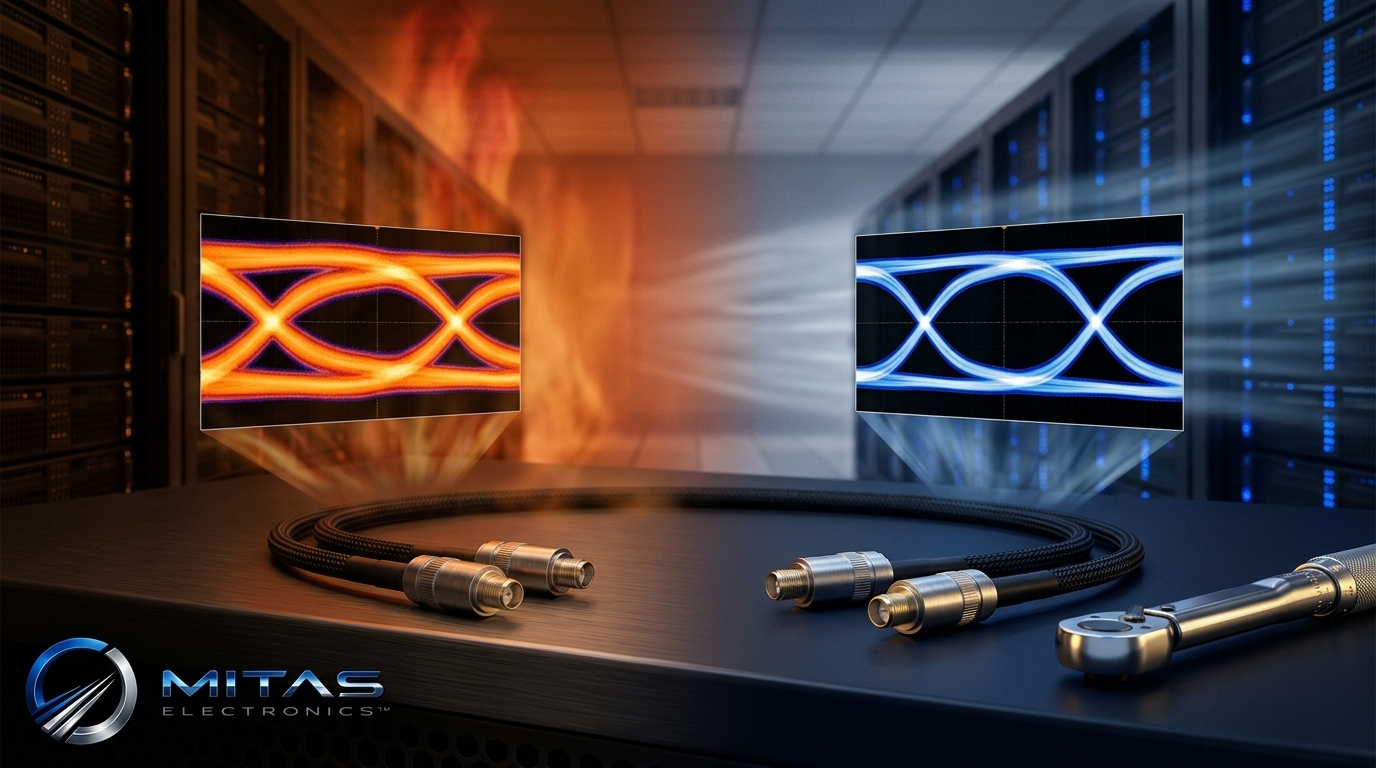
Prototype success is just the beginning. Beyond that, your system must thrive in real-world conditions. How do you ensure your high-speed interconnects remain reliable after the testing phase?
Bridging Prototype to Production Gaps
The gap between prototype and production is where many systems falter. What works in a controlled environment might not hold up in a live data center. This is where production repeatability becomes crucial.
It’s important to understand that skew variation and insertion loss drift can occur when conditions change. These factors can disrupt your data flow, leading to significant issues. Bridging these gaps requires a thorough understanding of both your system and its environment.
By focusing on this transition, you can ensure your system maintains its performance. This means considering every element, from design to deployment, and making adjustments as necessary. Field application engineering can play a key role in this process.
Ensuring Deployment Readiness
Deployment readiness is about more than just ensuring your system works; it’s about making sure it thrives. This involves prepping your system to handle all possible conditions, including fluctuating thermal loads.
When you move from prototype to production, connector reliability becomes a priority. It’s essential to choose materials and designs that can withstand the rigors of a live data center. This is where production repeatability and supply chain continuity come into play.
To maintain signal integrity, all aspects of your system must be aligned and ready. By focusing on readiness, you can ensure a smooth transition from lab to deployment. This is where Mitas excels, delivering solutions that keep your system performing at its best.
Mitas’ Thermal-Aware Solutions
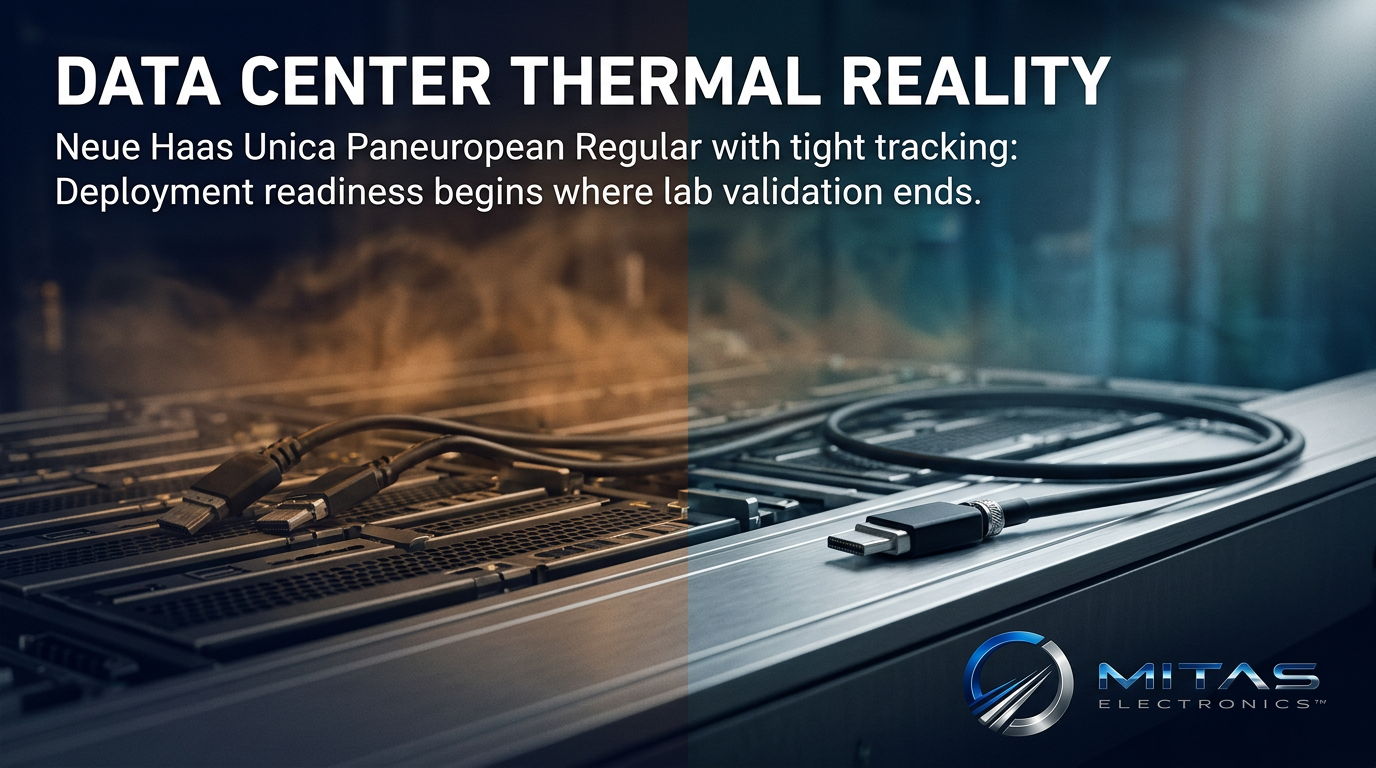
Mitas is committed to providing solutions that meet the thermal demands of modern data centers. With our engineering-driven manufacturing and field application expertise, we ensure your system remains reliable beyond the lab.
Engineering-Driven Manufacturing
At Mitas, we take pride in our engineering-driven manufacturing approach. This ensures that each component is designed to meet the specific needs of high-speed interconnects. Our process focuses on maintaining signal integrity and production repeatability.
We understand that it’s not just about creating a working prototype; it’s about ensuring that the transition to full-scale production is seamless. By using advanced techniques and materials, we ensure that your interconnects are not only functional but also durable.
Our commitment to quality means that every product is designed to withstand the thermal demands of a live data center. This focus on engineering excellence ensures your system remains operational under any conditions.
Field Application Expertise
Our field application expertise sets us apart. We work closely with you to understand the unique challenges your data center faces. This collaboration allows us to develop solutions tailored to your specific needs.
Our team of experts is always ready to assist with deployment and provide the support you need to maintain connector reliability and signal integrity. From initial design to full-scale production, we ensure your system is ready for real-world challenges.
By partnering with Mitas, you gain access to industry-leading knowledge and resources. Our solutions are designed to help you navigate the complexities of modern data centers and achieve reliable, long-term performance.