
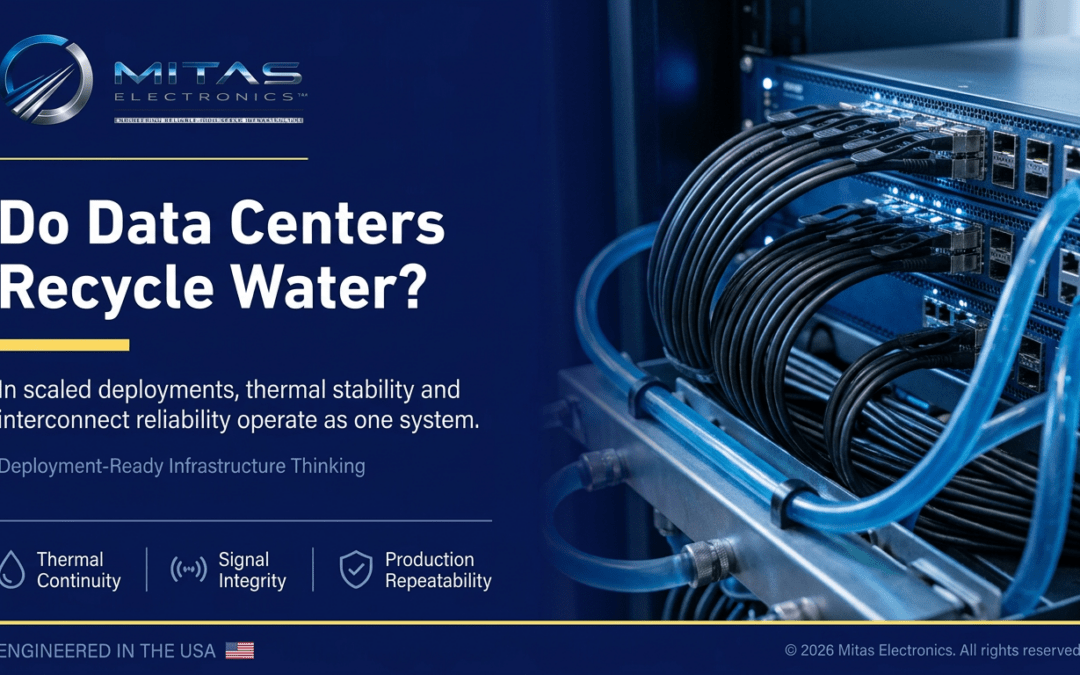
Data center water recycling is more than an environmental choice—it’s a critical infrastructure decision. When cooling loops reuse water, the key question isn’t just if it works once, but whether it supports thermal stability at scale with consistent operation. That consistency matters for your high-speed interconnects too. If the cooling system can’t maintain stable thermal conditions, signal integrity and uptime risk falling short as deployments grow. Explore more on data centers and water consumption.
Understanding Data Center Water Recycling
Data centers are adopting water recycling as a key part of their cooling strategies. But does it really make a difference?
Plain Answer to Headline Question
Yes, data centers do recycle water. This approach can significantly reduce water usage, contributing to sustainability and ensuring long-term operational efficiency.
Role of Water-Cooling Loops
Water-cooling loops play a crucial role in maintaining thermal conditions. They circulate chilled water to absorb heat generated by servers, ensuring systems stay cool. The recycled water is treated and reused, which helps in conserving resources while keeping temperatures stable.
Infrastructure Decisions Impacting Thermal Stability
The decisions around infrastructure impact how well a data center can maintain thermal stability. Recycled water must support consistent cooling to ensure system reliability. Factors like water quality, treatment processes, and loop design affect performance.
Tradeoffs in Cooling for Thermal Stability
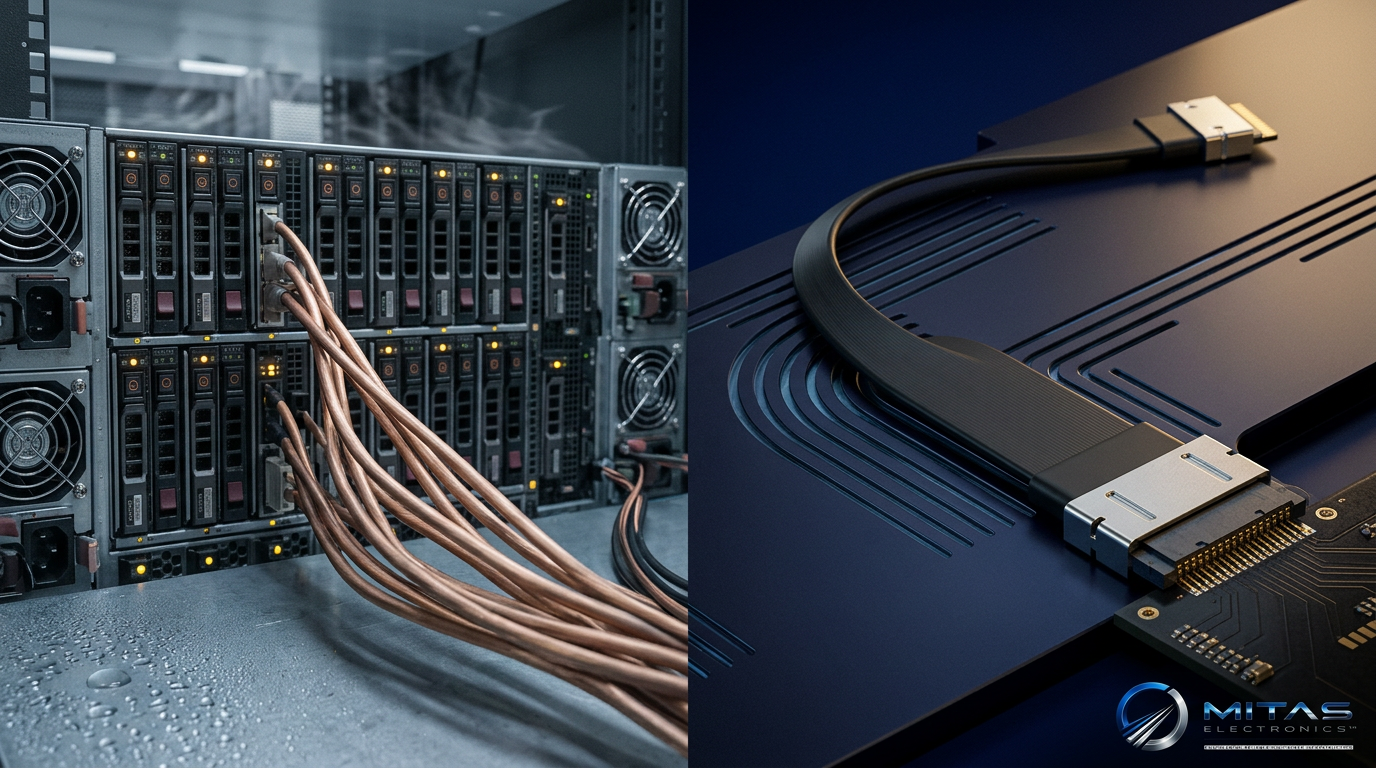
Cooling options must balance efficiency with performance. Understanding these tradeoffs is key to maintaining stability.
Closed Loop and Liquid Cooling Options
Closed loop cooling systems reuse the same water, minimizing wastage. Liquid cooling, where cold liquid directly contacts components, offers efficient cooling but requires careful handling to prevent leaks.
Immersion and Direct-to-Chip Cooling
Immersion cooling involves submerging components in a non-conductive liquid. It can handle high heat loads but needs specific infrastructure. Direct-to-chip cooling uses liquid directly on chips, providing targeted cooling but requiring precise design.
Chilled Water Loop and Cooling Tower Blowdown
Chilled water loops use water chilled at a central point and circulated to absorb heat. Cooling tower blowdown removes water impurities, but it must be managed to avoid excessive water use.
Ensuring Signal Integrity and Uptime
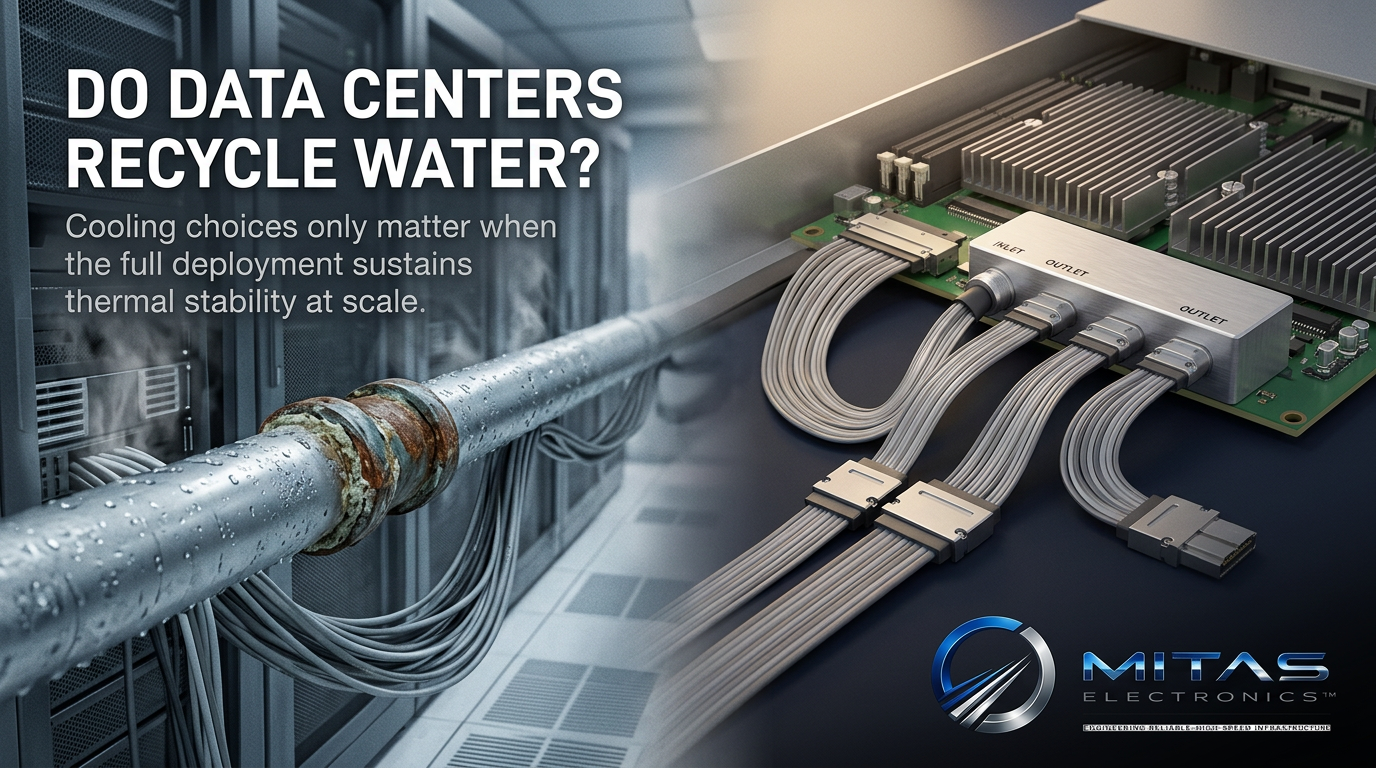
Stable cooling supports signal integrity and uptime, which are crucial for data center reliability.
High-Speed Interconnects and Signal Integrity
High-speed interconnects require stable temperatures to maintain signal integrity. Fluctuations can lead to errors and downtime.
Production Readiness and Manufacturing Repeatability
Systems must be production-ready, with repeatable manufacturing processes. This ensures devices perform consistently across deployments.
Rack-Level Liquid Cooling and Connector Reliability
Rack-level liquid cooling maintains consistent temperatures across servers. Reliable connectors are essential, as they must withstand thermal cycling without failure.
Frequently Asked Questions
What is the main benefit of water recycling in data centers?
Water recycling reduces water consumption and supports sustainable cooling, which is crucial for maintaining thermal stability at scale.
How do cooling options impact data center performance?
Different cooling options offer varying levels of efficiency and reliability. Choosing the right system affects thermal stability, signal integrity, and overall uptime.
Why is signal integrity important in data centers?
Signal integrity ensures data is transmitted accurately and reliably. Poor signal integrity can lead to data errors and increased downtime.
What role do high-speed interconnects play in data centers?
High-speed interconnects connect various components within a data center. They are essential for fast, reliable data transfer, especially in high-performance environments.
How can data centers ensure production readiness?
By establishing repeatable manufacturing processes and ensuring cooling systems maintain consistent performance, data centers can achieve production readiness.