

When you ask how much water AI uses per question, the straightforward answer doesn’t tell the whole story. AI water usage depends heavily on where workloads run, the cooling methods in place, and the infrastructure choices shaping the data center environment. For teams scaling high-density compute, understanding these system-level factors is key to managing water consumption across every query. This post breaks down why deployment-ready infrastructure and interconnect reliability matter more than raw metrics. For more insights on this topic, visit this article.
Understanding AI Water Usage
AI systems need more than just code to function; they rely on physical infrastructure that impacts water usage. This section explores how AI inference, cooling strategies, and infrastructure decisions contribute to water consumption.
AI Inference and Water Impact
When you run an AI model, it processes data, which uses energy. This energy often results in heat, requiring cooling to maintain system integrity. While direct water usage in inference might seem minor, the cooling systems tied to these processes are water-intensive, especially in data centers. The more models you run, the greater the demand for cooling, and thus, water.
AI’s water footprint grows with the complexity of models and the frequency of queries. For example, language models running in the cloud might use cooling systems that consume significant water to manage heat. It’s not just about the computation but also the operational environment that supports these activities. Each AI query indirectly contributes to water usage, highlighting the importance of efficient system design.
Cooling Strategies and Water Consumption
Cooling strategies are crucial in determining how much water your AI systems use. Traditional air-based cooling can be less water-intensive but often inefficient for high-density compute environments. In contrast, liquid cooling and evaporative methods may use more water but offer better thermal management for intensive workloads.
Data centers often use evaporative cooling, which can consume large amounts of water but is effective for maintaining system performance. Liquid cooling, though more complex, can be more efficient and reduce overall water use if managed correctly. It’s a trade-off between initial setup complexity and long-term sustainability. Learn how [cooling impacts data center efficiency](https://## Understanding AI Water Usage
AI systems consume water through various mechanisms, primarily for cooling purposes. Understanding the factors influencing this consumption helps in managing resources effectively.
AI Inference and Water Impact
AI inference involves complex computations that generate heat. To manage this, data centers rely on cooling systems that, in turn, use water. The water usage varies based on the intensity of the AI workload. High-density compute environments, like those handling AI tasks, require more cooling, thus impacting water consumption. It’s not just about the question being processed; it’s about how that processing is managed within the data center infrastructure. This resource management is critical for sustaining operations without excessive water consumption.
Cooling Strategies and Water Consumption
Cooling strategies significantly affect how much water a data center uses. Traditional methods like air cooling are being supplemented or replaced by more water-intensive techniques. For example, liquid cooling involves circulating water to absorb heat directly from components, while immersion cooling submerges hardware in a non-conductive liquid. Evaporative cooling uses water evaporation to remove heat. Each method has its pros and cons, particularly concerning water usage. Choosing the right strategy can optimize performance and reduce environmental impact.
Infrastructure Decisions and Resource Use
Infrastructure choices play a pivotal role in determining resource use, including water. The design of your data center, the efficiency of your cooling systems, and the integration of technology all contribute to overall consumption. Systems designed with high-speed interconnects and advanced cooling techniques can offer better performance and lower water use. Thus, making informed infrastructure decisions is key to optimizing resource use. For further reading on data center strategies, check out this Brookings article.
System Factors in Water Consumption
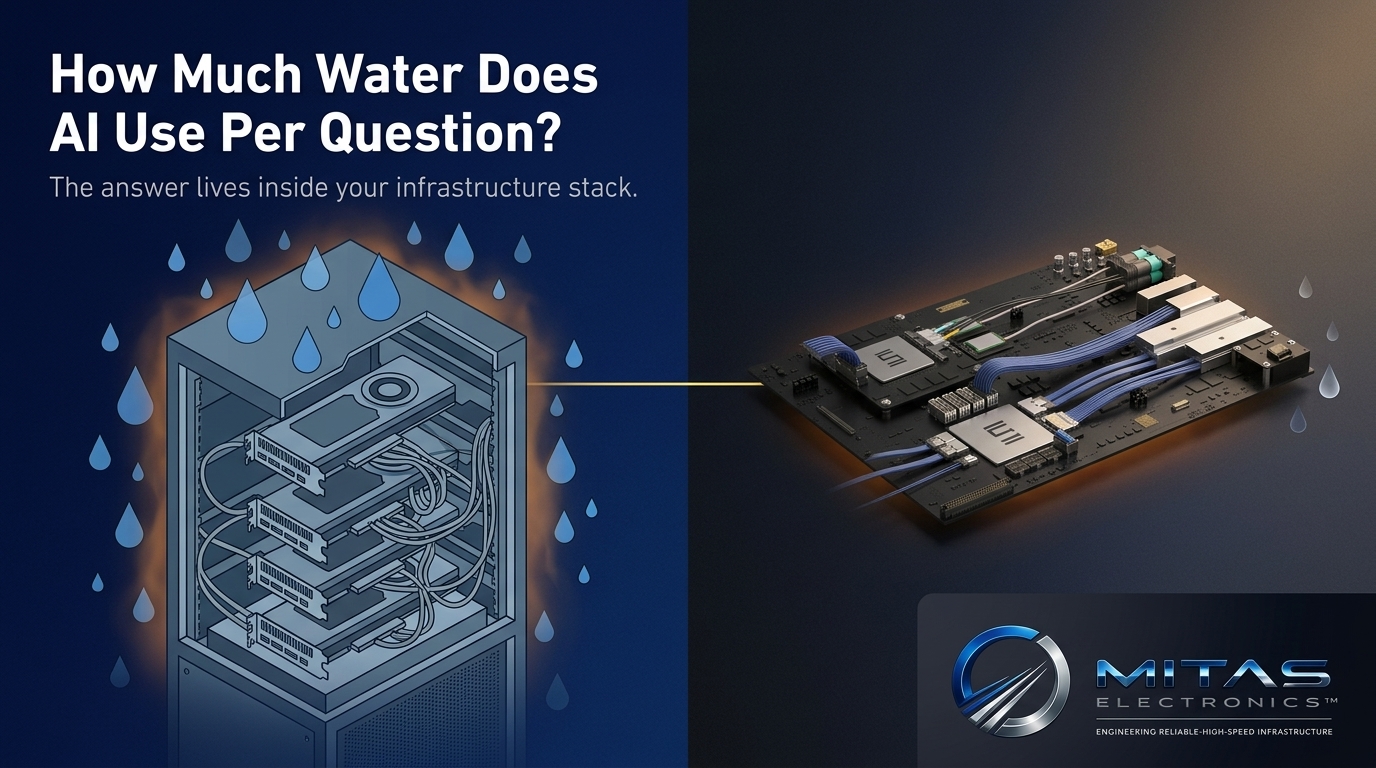
Each system component affects water consumption differently. Understanding these impacts can lead to more efficient operations.
AI Cooling Methods: Liquid, Immersion, Evaporative
Different cooling methods offer varying efficiencies. Liquid cooling circulates water to transfer heat away from critical components, while immersion cooling involves submerging hardware in a cooling liquid. Evaporative systems, on the other hand, rely on water evaporation to dissipate heat. Each method has unique demands on water resources and operational complexity. Selecting the right method depends on infrastructure goals and environmental considerations. Learn more about cooling solutions in high-density deployments here.
Interconnect Reliability and Efficiency
Interconnects are crucial for maintaining system reliability and efficiency. High-speed interconnects, such as those developed by Mitas, ensure data moves efficiently, reducing the need for excess cooling. This reliability ensures systems operate at optimal levels without unnecessary resource use. The precision engineering behind these components plays a critical role in maintaining overall system efficiency. For a deeper look into interconnect reliability, visit this article.
Deployment Readiness and Sustainability
Ensuring that systems are deployment-ready involves more than just technical specifications. It’s about integrating sustainable practices into the deployment process. By focusing on readiness, you can ensure that systems are not only efficient but also have a minimal environmental footprint. This approach contributes to long-term sustainability and operational success.
Optimizing AI Infrastructure
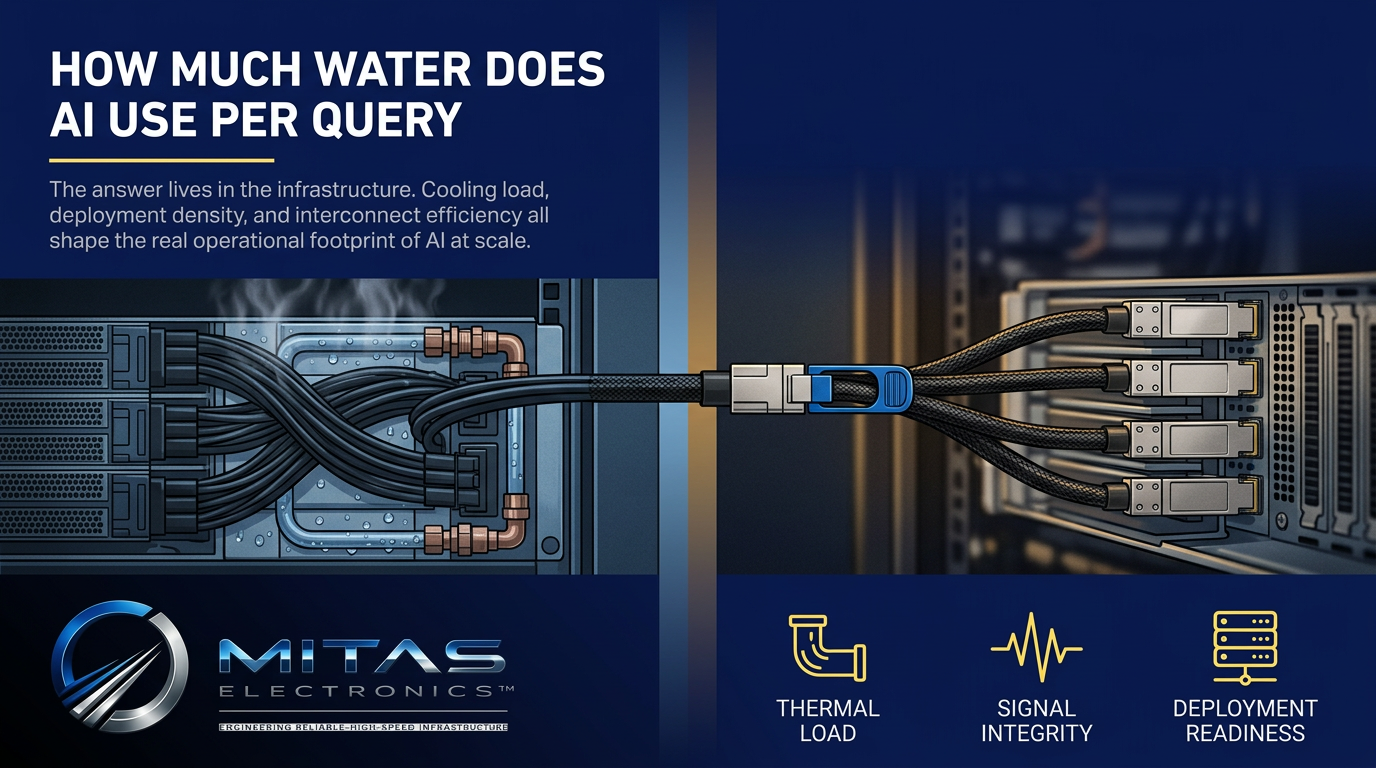
Optimizing infrastructure involves several key strategies. These strategies ensure systems are efficient and prepared for future demands.
High-Speed Interconnects and Signal Integrity
High-speed interconnects are vital for reducing latency and maintaining signal integrity. These components allow for faster data transfer, improving system performance. By investing in quality interconnects, you reduce the need for additional cooling and resource consumption. This focus on infrastructure quality is essential for optimal performance.
Manufacturing Repeatability and Continuity
Consistency in manufacturing ensures that each component meets the same high standards, reducing the likelihood of failure and the need for additional resources. Repeatability in production guarantees that every piece performs as expected, supporting the overall efficiency of AI systems. This consistency is a cornerstone of sustainable infrastructure development.
Data Center Water Usage and PUE/WUE
Performance metrics like PUE (Power Usage Effectiveness) and WUE (Water Usage Effectiveness) provide insights into resource efficiency. By analyzing these metrics, you can identify areas for improvement. A focus on reducing PUE and WUE helps in minimizing environmental impact while maintaining system performance. This approach aligns with sustainable operational goals.
Frequently Asked Questions
What is the primary factor affecting AI water usage?
The primary factor is the cooling strategy employed. Different methods, such as liquid or immersion cooling, use varying amounts of water to manage heat generated by AI workloads.
How can data centers reduce their water consumption?
By optimizing cooling methods and infrastructure decisions, data centers can minimize water use. For example, employing high-speed interconnects reduces the need for excessive cooling.
What role do PUE and WUE play in resource management?
PUE and WUE are performance metrics that help assess the efficiency of resource use in data centers. Lower values indicate better performance, guiding efforts in sustainability.
Why is signal integrity important in AI systems?
Signal integrity ensures that data transfers efficiently without errors, reducing the need for redundant cooling and resource use, thus optimizing overall system efficiency.
How do infrastructure decisions impact AI system sustainability?
Infrastructure decisions shape the efficiency and resource use of AI systems. Effective designs incorporate sustainable practices, reducing environmental impact while maintaining performance.