

A clean speed test result feels like a win. You’ve proven the interconnect can hit target performance in a controlled setup. But that’s just the beginning. True deployment readiness demands proving signal integrity, manufacturing repeatability, and consistent performance across full production scale. Let’s explore what your first measurement doesn’t show—and what you need to check before trusting your high-speed interconnect in real-world conditions. For further insights, you might find this document helpful.
Speed Test: A Starting Point
Your interconnect passed the speed test. That’s great, but what does it really mean? At its core, a speed test verifies that your high-speed interconnect can perform up to its specifications in an ideal, controlled environment. But this is just the tip of the iceberg. Let’s dig deeper into why your initial results are not the whole story.
Understanding Speed Test Limitations
A clean speed test result can be misleading. It often occurs in a lab setting, where conditions are perfect. But real-world environments are far from ideal. For example, factors like electromagnetic interference and temperature fluctuations can alter performance. The speed test won’t reveal these vulnerabilities. Most people believe that if you pass this test, you’re ready to go. But the reality is, you need more rigorous checks.
Beyond Initial Measurements
Initial tests focus on specific metrics like bit error rate or eye diagrams. While these are important, they don’t account for long-term reliability. Imagine a car that performs well in a sprint but can’t endure a marathon. That’s your interconnect without further testing. You need to understand how it behaves over time and under different conditions.
The Gap to Deployment Readiness
The gap between passing a speed test and being deployment-ready is significant. Many assume that if the interconnect works in a lab, it will work in the field. This is a risky assumption. You need to ensure that every piece of equipment performs consistently and reliably across different scenarios. Here’s the key insight: a speed test is only the beginning of your deployment journey.
Hidden Production Checks
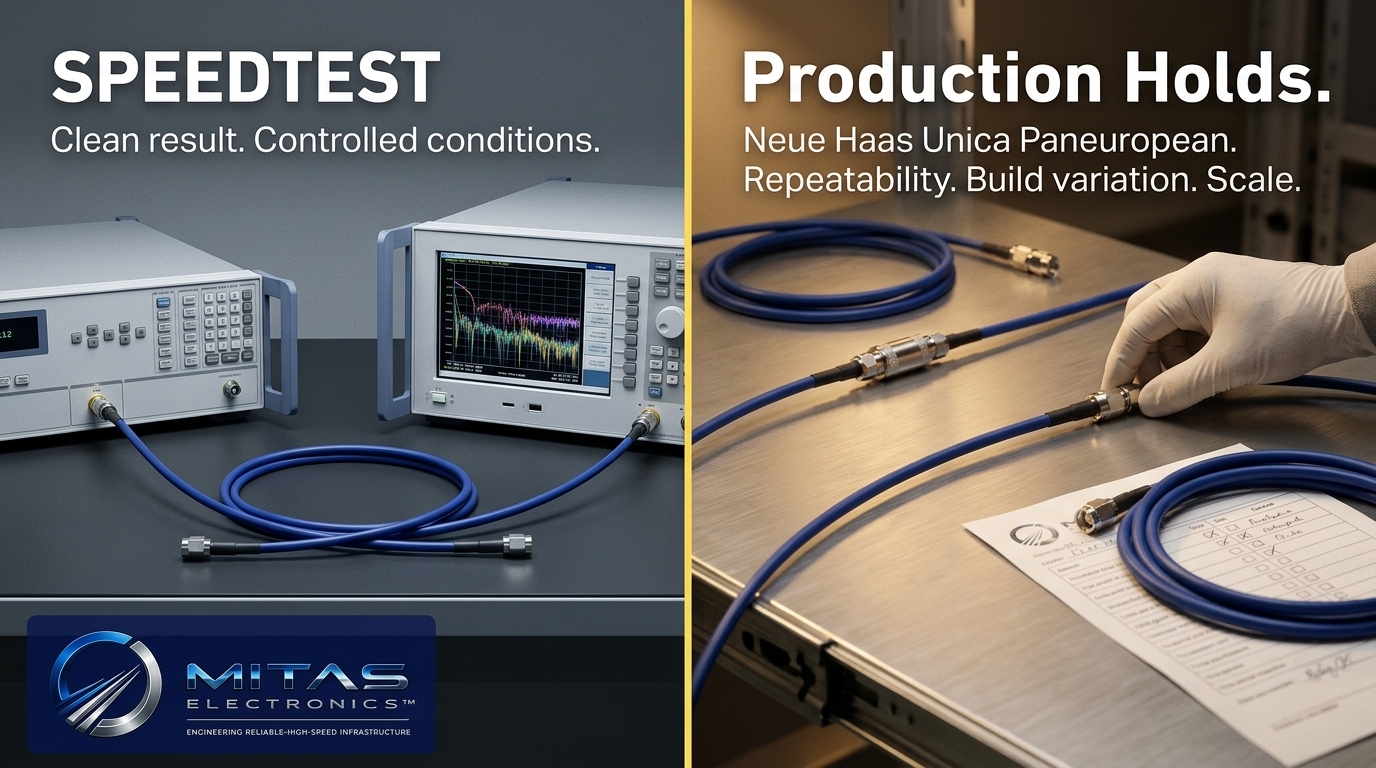
Ensuring your interconnect is ready for deployment requires additional hidden checks. These tests ensure your system holds up under pressure and is consistent across all units.
Ensuring Signal Integrity
Signal integrity is crucial for reliable data transmission. It’s not just about speed; it’s about maintaining quality. Factors like impedance control and jitter can affect this. A detailed analysis of S-parameters will help you identify and mitigate these risks. Without this, your system may fail when it’s needed the most.
Validating Manufacturing Repeatability
Manufacturing repeatability is your next hurdle. How do you ensure every interconnect produced matches the quality of your prototype? This requires rigorous process checks and controls. You must evaluate parameters like return loss and insertion loss. Consistency in these measures means your manufacturing process is reliable.
Securing Supply Chain Continuity
Supply chain continuity is often overlooked, yet essential. What happens if a key component is unavailable? You need a robust strategy to secure supply chain continuity. This means having alternative sources and flexible logistics in place to avoid disruptions.
Deployment-critical Conditions
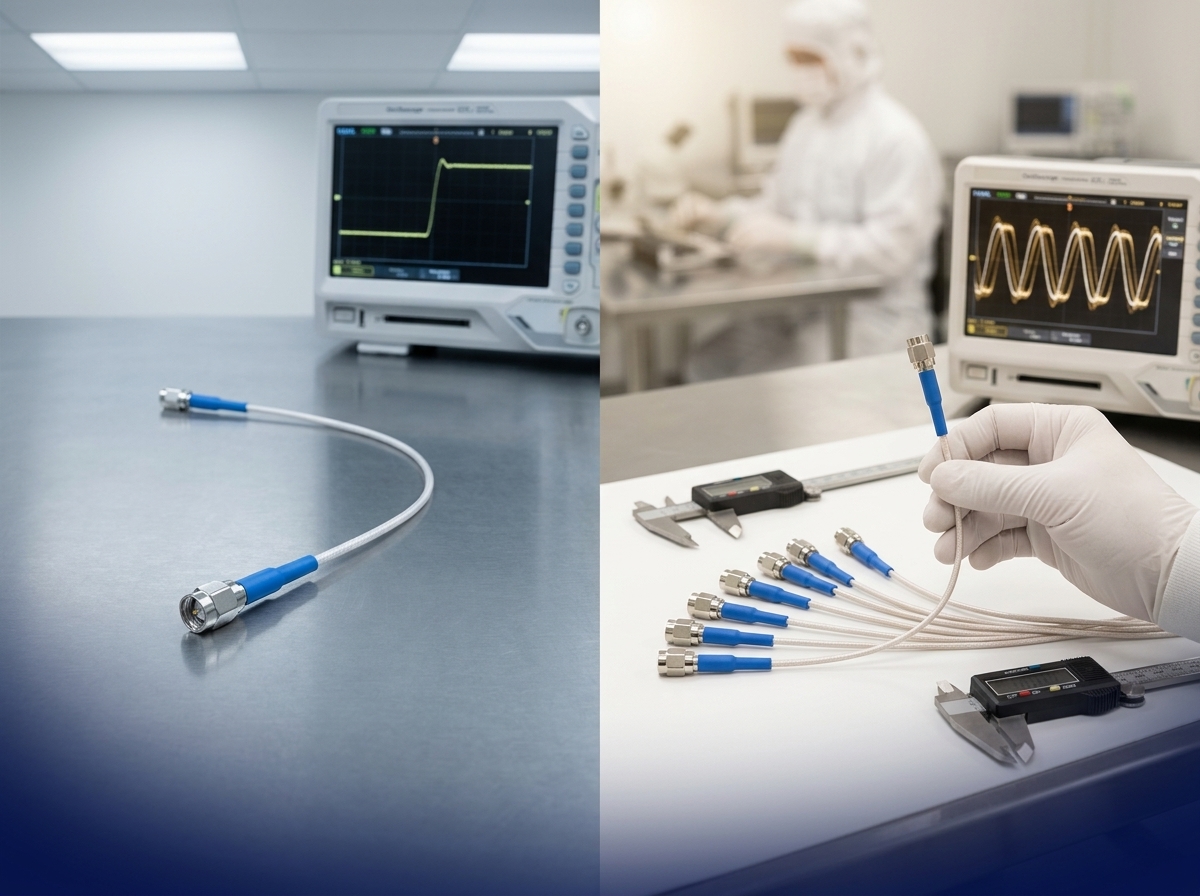
Now that you’ve addressed hidden checks, it’s time to focus on conditions critical to deployment. These ensure your interconnect is not just built well but can also perform under stress.
Environmental Stress Testing
Environmental stress testing is vital. Your interconnect must withstand real-world conditions, such as vibration and thermal cycling. These tests simulate harsh environments to see how your system responds. This ensures your interconnect won’t fail under pressure.
Assessing Process Capability
Assessing process capability involves measuring the consistency of your manufacturing process. Use metrics like Cp and Cpk to gauge this. A high capability index implies your process can consistently produce quality products. This is your quality plan in action.
Design for Manufacturability Considerations
Finally, consider design for manufacturability (DFM). This ensures your product is easy to produce and assemble. Proper DFM can reduce costs and improve quality. It involves integrating design and manufacturing processes for seamless production. This is crucial for scaling from prototype to production.
Frequently Asked Questions
What does a speed test measure?
A speed test measures the performance of your interconnect in an ideal, controlled environment. It checks metrics like speed and data transfer rate but doesn’t account for real-world conditions.
Why is signal integrity important?
Signal integrity ensures reliable data transmission by maintaining quality. Without it, your system may experience data loss or errors, affecting overall performance.
How can I ensure manufacturing repeatability?
Ensure manufacturing repeatability by implementing rigorous process controls and checks. Evaluate parameters like return loss and insertion loss to ensure consistency across all units produced.