
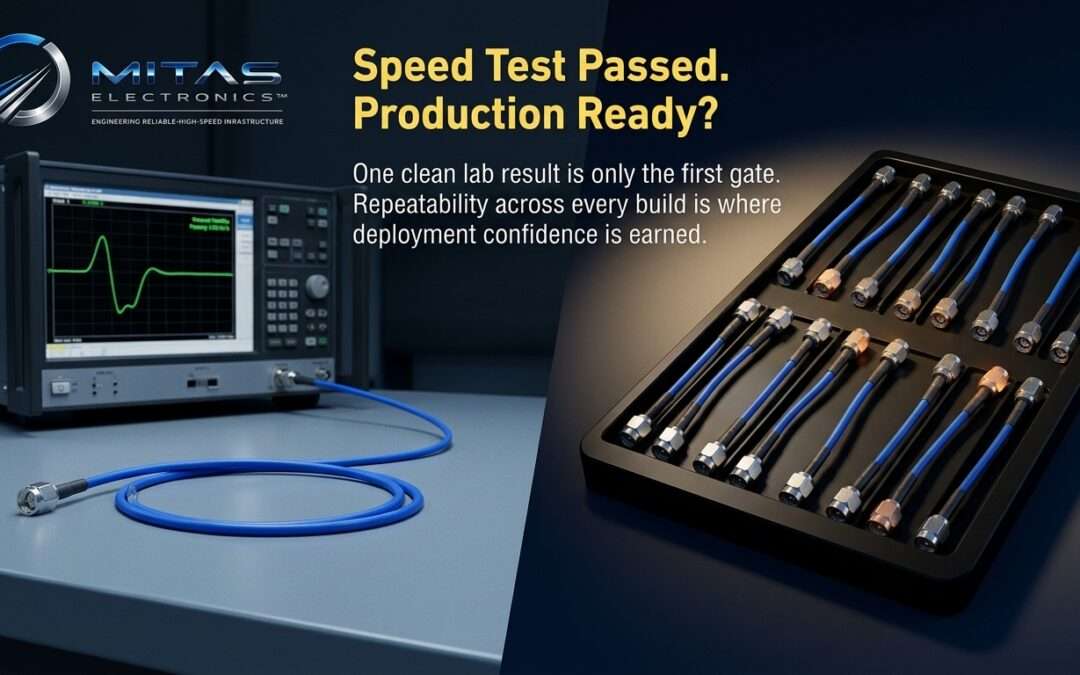
A fast Google Speedtest result feels like a win—proof your high-speed interconnect works. But that number only tells part of the story. Real deployment readiness depends on consistent performance across multiple builds, varied suppliers, and full-scale production. In this post, we’ll expose why a strong throughput test doesn’t guarantee your interconnect can scale—and what it really takes to move from prototype success to reliable, repeatable deployment.
The Myth of Speedtest Readiness
A fast speed test feels like a win. But, does it mean your system is ready for full deployment? Let’s dive in and find out.
Understanding Google Speedtest Results
Google Speedtest gives you a snapshot of your network speed. It measures how fast data moves from point A to point B. But it doesn’t tell you everything. A quick test can show a strong connection, but there are hidden factors. For example, how will your system handle real-world conditions? Speedtest results can be inconsistent, as explained in this article.
Think of it like a car test drive. You may know how fast it goes, but not how it handles rain or rough roads. Speed is just one part of the equation. For more insights, check out this InformationWeek article.
The Hidden Risks of Scaling
Scaling up a system reveals risks not seen in simple tests. When you scale, you deal with more data, different conditions, and potential failures. Imagine your interconnect as a bridge. It might hold one car, but what about a convoy? The same applies to high-speed interconnects. As you add more data, small issues can grow.
For example, signal interference might not show up in a single test. But under full load, it can cause problems. This is why understanding the limitations of speed tests is crucial. More on this can be found in this LinkedIn Pulse article.
Beyond the Lab: Real-World Challenges
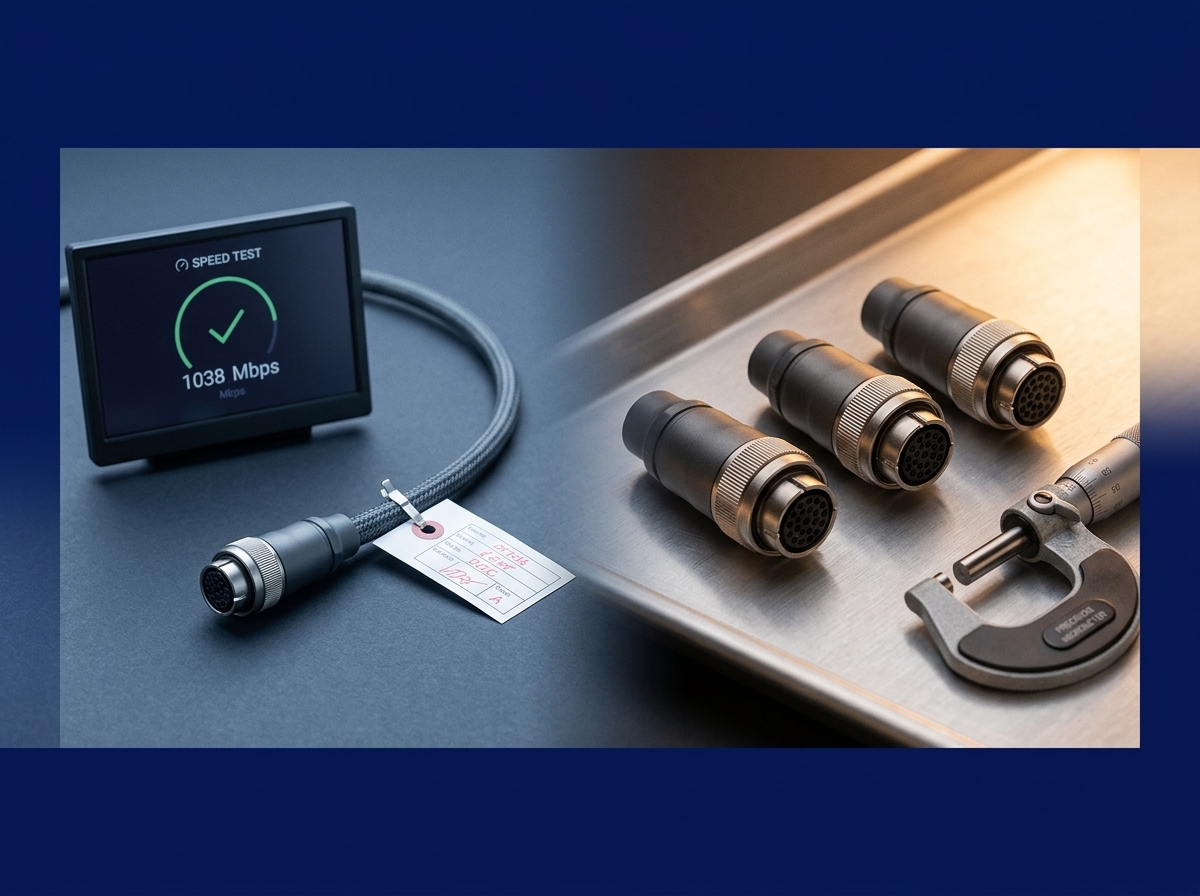
Knowing the limits of a speed test is just the start. Let’s look at the real-world challenges of scaling your interconnect system.
Manufacturing Repeatability and Consistency
When moving to production, consistency is crucial. A prototype might work well in the lab, but can you make it work the same way every time? Manufacturing repeatability ensures each unit performs as expected. Even slight variations can lead to big problems.
Think about baking bread. Your recipe might be perfect once, but can you repeat it for thousands of loaves? Manufacturing high-speed interconnects is similar. Repeatability keeps performance steady across all units. Understanding DFM for interconnects can help ensure success as you transition to full production.
Ensuring Signal Integrity at Scale
Signal integrity means maintaining a clear, strong signal. As systems scale up, this becomes a major concern. Imagine whispering across a room. Now, imagine doing it in a noisy stadium. The same principle applies to signal integrity. More devices and data can introduce noise.
Signal integrity issues like crosstalk, jitter, and insertion loss are important factors. These issues can distort signals, causing data errors. Successful deployment requires addressing these challenges head-on. Learn more about this in our guide on fiber optic cable types.
Building Confidence for Deployment
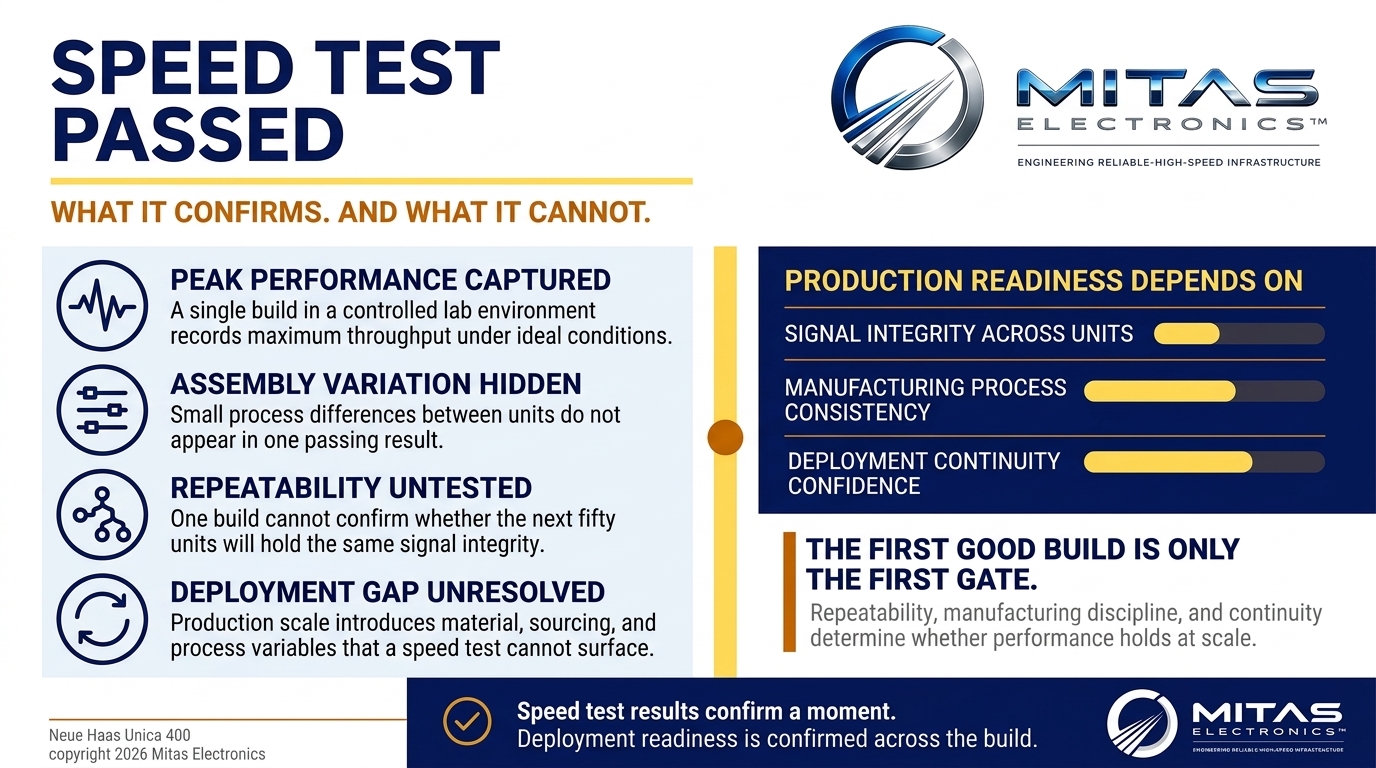
Understanding these challenges is key. Let’s explore how to build confidence from prototype to production.
Prototyping to Production Transition
The shift from prototype to production is a critical step. It requires thorough testing and validation. Prototypes show what’s possible, but real-world deployment tests what’s reliable. This transition needs a strict focus on manufacturing consistency and signal integrity.
Consider it like moving from a concept car to a full production model. Each part must meet specifications repeatedly. Explore more here.
Importance of Production Validation
Production validation ensures your system is truly ready. It tests the interconnects under real conditions, confirming they work as expected. Think of it as the final exam before graduation. This step checks for unforeseen issues, ensuring your system maintains performance at scale.
Production validation is your safety net. It ensures reliability and integrity before full deployment. For more on this, see our article on the role of speed tests.
Frequently Asked Questions
What does Google Speedtest measure?
Google Speedtest measures network speed, showing how fast data moves between points. It gives a quick snapshot of your connection but doesn’t reveal all performance factors.
Why isn’t a fast speed test enough for deployment?
A speed test only shows part of the picture. It doesn’t account for manufacturing consistency or signal integrity under full-scale conditions, which are critical for reliable deployment.
How can I ensure signal integrity at scale?
Ensuring signal integrity involves addressing issues like crosstalk, jitter, and insertion loss. Use robust testing and validation processes to maintain a strong, clear signal across your system.
What is the importance of production validation?
Production validation confirms system readiness for real-world conditions. It tests interconnects under full load, ensuring performance and reliability before full deployment.
How do I transition from prototype to production?
Transitioning involves thorough testing and validation of manufacturing processes and signal integrity. Focus on repeatability and real-world conditions to ensure successful scaling.